We use cookies. By continuing to use this site, you accept privacy policy

How does microcement differ from decorative plaster

Decorative plaster in the interior
Designing walls with decorative plaster has long ceased to be an exotic feature in the interior design of all kinds of rooms. Such as offices, public facilities, and living quarters. A wide association of interior styles gives room for the embodiment of any design ideas. Modern compositions allow you to achieve high decorativeness combined with practicality and durability. This material is environmentally friendly and convenient to work with. In terms of qualitative indicators, the plaster in the design successfully competes with all other finishing materials.
The advantages of plaster
As a rule, it does not require ideal preparation of the basis (cost savings).
It is practical to use, the decorative effect hides traces of long-term surface operation.
Damaged areas can be restored locally (unlike painting or wallpaper).
You can lay it down on most of the foundations used in construction, such as concrete, plaster, gypsum cardboard, and sheet materials (MDF, plywood).
It can be used indoors and outside.
Safe for health, it passes the air but does not absorb odors.
Increases thermal and sound insulation of the room.
It does not burn out in the sun, well withstands temperature differences.
It has a large decorative variety.
Types of plaster
There are 4 types of plaster, depending on the type of binder:
Acrylic (moisture resistant, durable, and it's getting dry quickly);
Mineral (cheaper in price, more heat resistant, and environmentally friendly);
Silicate ( the most solid and durable, is mainly used for facades);
Silicone (handy and practical, but the most expensive).
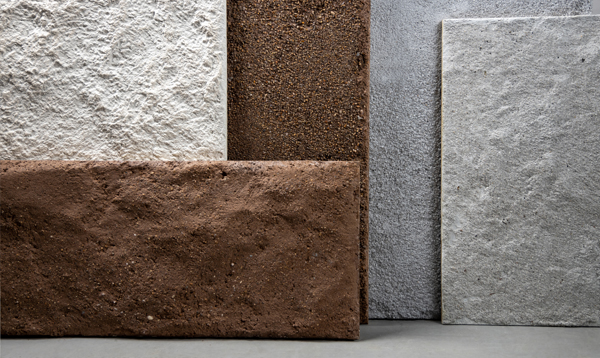
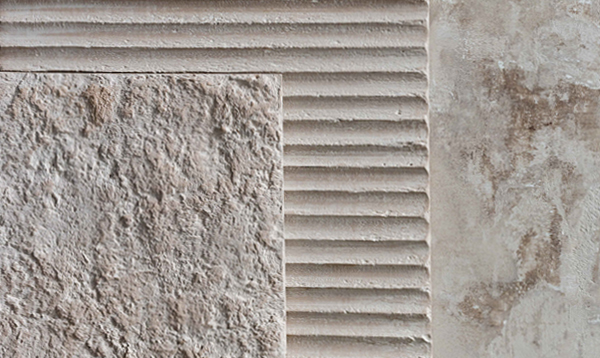
Plaster can also vary significantly in texture and the way it is laid. It can be textured (travertine, fur coat, mountain stone, sgraffito) or smooth (Venetian plaster, Marseille wax, Ottocento), and so on. By using different tools and combining coatings in different colors, a craftsman can create a wide variety of patterns. Decorative plaster in interior design is an excellent alternative not only to boring wallpaper in a room or painting in a hallway but also to tiles in the bathroom. Not every type of plaster can be used in a room with such high humidity. But one of them, microcement (or microconcrete), is perfect for this.
Why microcement is unique
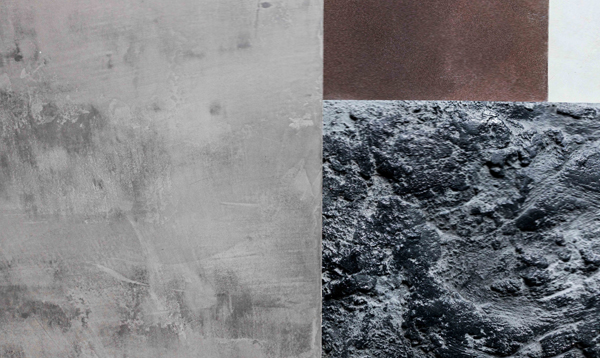
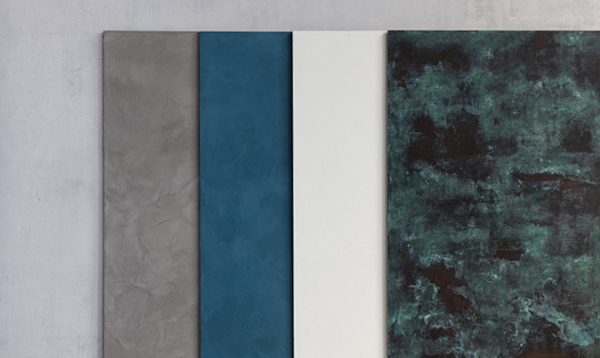
These types of coatings are often confused. Let us get this straight. Technically, microcement is one of the types of decorative plaster. It is a dry mixture of cement and silica sand with the addition of resins and/or polymers, which give the coating unprecedented strength and resistance, and at the same time elasticity. Microcement is radically different from plaster as it is covered with several layers of varnish on top. This makes it resistant even to direct contact with water. Using mineral dyes, the mixture can be painted in any shade.
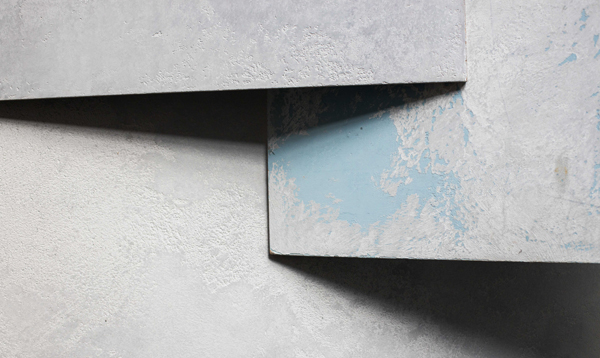
As a result, we get a seamless thin coating of about 2-3mm. It’s smooth but not slippery and resistant to moisture, household chemicals, and abrasion. Thanks to its high adhesion, you can apply microcement to all types of coatings without special preparation.
Microcement is flexible. Unlike conventional plaster, it can be easily applied not only on floors, but also on walls, furniture facades, and any other flat surface. Microconcrete is in high demand for designing kitchen countertops and aprons, spaces around pools, inside and outside showers. It's also used outdoors, for example, for the design of the entrance, porch, or facade of a building.
Is microcement and microconcrete the same or not?
The terms "microcement" and "microconcrete" are often used as synonyms. Sometimes, however, they're distinguished. A mixture of coarse-grained sand is called microconcrete. The coating of it is more porous and textured. Small-grain sand produces a denser, homogeneous, and smooth coating called microcement.
Advantages and disadvantages of the coating
The advantages of microcement include:
It's more durable and significantly stronger than ordinary plaster, which extends its range of use. It's in demand in rooms with high mechanical loads (foyers of public buildings, restaurants, etc.)
It can be applied to any coating, no matter how stable, and doesn't require a dismantling of the old coating, which significantly shortens installation times.
It doesn't impose any structural load on the substrate (unlike toping floors) and doesn't hide the volume.
Due to its elasticity and the presence of a reinforcing grid, it retains shrinkage cracks in the substrate.
It can be customized in any color.
It's environmentally friendly, fireproof, and also thermally, mechanically, and biologically stable.
It is quickly mounted with large volumes and is available in price.
It can also be restored locally.
There are two relative disadvantages of the material. The first is its property to harden quickly. The viability of the solution is only 30-60 minutes. To get a homogeneous seamless coating, it needs to be laid on the area of the room continuously. This requires a team of several qualified masters. The second - microcement can only be applied to a well-leveled surface. The subtle coating is not able to mask the levels of levels, hollows, and bumps.
What features does microcement provide designers
Due to its unique properties, microcement is used in the interior design as no other material. Using a microcement, a designer can form a homogeneous three-dimensional coating, smoothly flowing from the ceiling to walls, furniture, and floor. It is just a treasure for such popular styles as loft, hi-tech, minimalism. The same feature makes any small room covered with microconcrete more spacious and bright. A hi-tech kitchen with a floor, a countertop, and an apron made using such tones as “wet asphalt” or “light gray granite” looks gorgeous.
But that is not all. Its great palette of colors and textures makes it widely used in the design of Country, сlassic, Scandinavian, and Vabi-Sabi styles. Microcment moisture resistance and strength are indispensable in kitchens, in the hallway, or in a bathhouse. Microconcrete, laid instead of tiles in a bathroom or around the pool, will create a seamless, perfectly even coating. And completely covering the microconcrete floor, walls, ceiling, and partitions in the bathroom, you can create a spectacular futuristic design.
Comparative characteristics of decorative plaster and microcement
Plaster and microcement, despite the fact that they are related materials, have a number of differences and are used differently in interior decoration.
The plaster has a more porous surface. It shouldn't be covered with additional lacquer protection, and it has a texture of natural material. Using it, you can create a cozy and warm interior. Plaster is a priority choice for such styles as Mediterranean, classic, and Empire. It is less demanding on the quality of the surface and easily masks its shortcomings.
Microcment and microconcrete are more universal. They can cover any even surface, both in vertical and horizontal planes. This is a great choice for rooms with increased human traffic and humidity. But they create a cool and restrained atmosphere. This material will not be appropriate in the bedroom or children's room. It requires a perfectly flat surface and a high qualification level of builders.
TheTceh offers a wide variety of microcments from leading European manufacturers. We make a highly qualified laying of such coating in Kyiv, Kharkiv, Lviv, Ivano-Frankivsk, Odessa, and other cities of Ukraine.