
We use cookies. By continuing to use this site, you accept privacy policy

What's the best coating: poured floor, quartz floor or microcement

Microcement floor
Microcement has recently appeared on the market of construction materials. Yet nowadays it is already a widely used and sought-after technology for installing floors. It is often called microconcrete. In fact, it is one and the same technology. The difference is in the grind of the concrete, which makes the surface either smoother or rougher.
Microcrete is a mineral-polymer mixture, which includes:
- fine grinding cement;
- fine quartz sand;
- water-based polymer resin;
- coloring pigment;
- modifying agents.
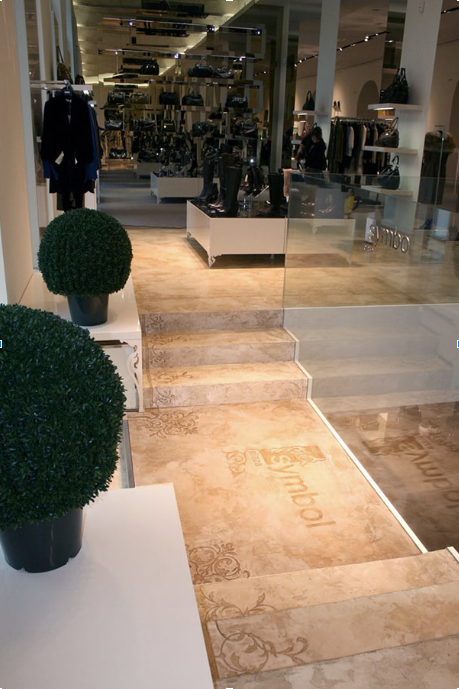
The technology also often refers to poured floors, although this is not quite correct. Microcement mixture does not spread itself, it needs to be smoothed with a trowel. Microcement is a type of decorative plaster with increased resistance to damage and abrasion. But, unlike decorative plaster, it is marketed as a dry mixture and is diluted right before application. The coating layer is as small as 1-3 mm. At the same time, the material has high adhesion and is easily applied to any even dense surface.
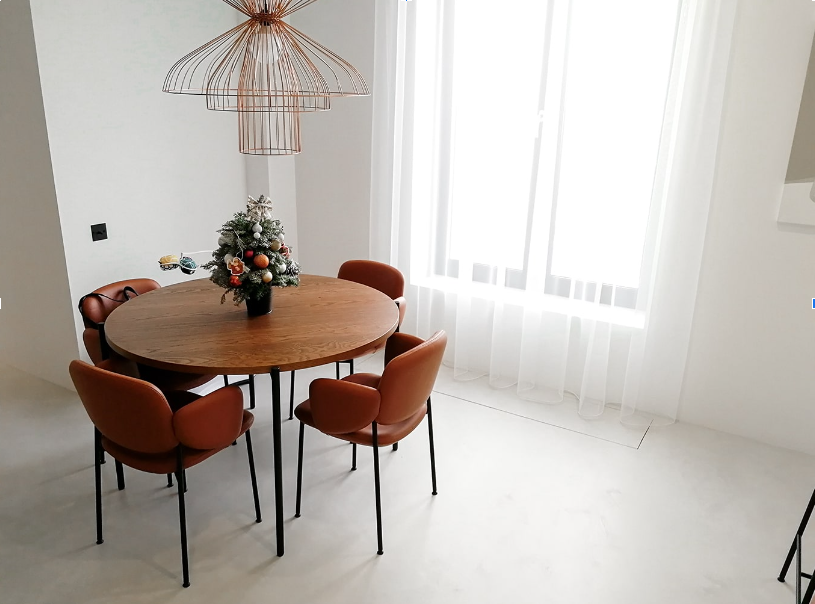
A big advantage of microcement is that it can be applied right on top of the laid ceramic tile if a quick repair is needed. In addition, not only horizontal, but also vertical surfaces can be covered with microcement. When covering walls, microcement can be applied directly to gypsum plaster. In terms of strength and durability, the material is not inferior to other types of flooring. It is not slippery, resistant to moisture, and does not burn out from ultraviolet light.
Such an impressive set of advantages significantly expands the scope of application of the material. Microcement is widely used for finishing not only floors but also ceilings, walls, furniture, kitchen countertops and window sills, stairwells inside and outside buildings, and various decorative items. By adding various plasticizers and colorants, you can get a huge palette of colors and textures: matte, glossy, textured, with a satin effect, metallic, etc. The material easily fits into any of the existing design styles, including hard loft, minimalism, and high-tech.
Regular wet cleaning is enough to take care of it.
Pros and cons of microcement
Microcement, being an all-natural material, is safe for humans and animals, as well as hypoallergenic. It is a ductile material that perfectly resists deformation loads. In comparison to other flooring materials microcement wins on 6 points.
It is:
- lighter,
- cheaper,
- easier to install,
- is much more versatile,
- does not require complex preliminary base preparation,
- can be easily restored,
- and, most importantly, it can be applied to a vertical surface.
Microcement floor disadvantages
It also has its disadvantages. It is still a cold coating, therefore, in habitable rooms it is recommended to mount it over a system of "warm floor".
Such as darkening after a varnish has been applied. The result depends on many factors that are difficult to predict: the quality of the original coating, the properties of the varnish chosen, humidity, light, temperature, etc.
It is not as resistant to damage and chipping as epoxy or polyurethane flooring. It can be compared to oak parquet in terms of durability. Sand or small hard debris, metal furniture legs, etc. can leave scratches on it. Which, however, can easily be repaired with restoration.
Poured floor
Poured floors have become common quite recently and today they are one of the most popular varieties of flooring. They replaced the already worn out parquet, tile, laminate flooring and linoleum. Depending on the composition of the mixture poured floors are divided into two main groups:
- mineral and
- polymer.
As the name suggests, mineral mixes contain cement with mineral additives. They are mainly used as a self-leveling base for the finishing coat. Mineral poured floors have also recently become common as a finishing coating, but their lifetime is limited due to the lack of durability and resistance to substrate cracking.
Polymer poured floors, meanwhile, can be made of:
- polyurethane,
- epoxy,
- methacrylate.
Polyurethane floors are the most elastic, they are the best at withstanding the deformation load. They resemble linoleum in texture and are often marketed as “liquid linoleum”. This is a great choice for the gym, kids' daycare center, or manufacturing lab. At the same time, the process of laying polyurethane flooring is quite complicated and quite expensive. In addition, polyurethane systems are prone to turn yellow when exposed to ultraviolet light. Therefore, you need to be very careful when choosing a decorative coating.
Epoxy floors are harder and stiffer, less resistant to impact, but using coatings of different colors a craftsman can create a sophisticated pattern on the floor. It is an environmentally friendly and safe coating approved for installation in hospitals, preschools, food service units, etc.
However, epoxy is a finicky material and requires skill in application. In addition, the resin is brittle and the risk of getting it damaged by a rigid object is fairly high. Epoxy coatings are also likely to change color when exposed to ultraviolet light. One more drawback of epoxy flooring is its high price.
Methacrylate floors have the fastest start-up time. Full polymerization takes as short as 50-60 minutes, and the coating reaches its maximum strength already in 2 hours. This allows the installation to be carried out without stopping the work processes. Such flooring is the only pouring floor that can be installed in sub-zero temperatures.
It is the most durable, chemically resistant, and almost non-slippery type of self-leveling floor. It is able to withstand the movement of heavy equipment on its surface, so it is in demand for the construction of industrial premises. The reason for this is that the coating is thicker in comparison to other self-leveling coatings - up to 12 mm.
However, it is the hardening speed that is also the biggest disadvantage. Only a well-trained professional can perform the installation. In addition, the coating releases a large amount of toxic substances into the air until it hardens. Therefore, when laying it is necessary to ensure good ventilation in the room. The cost of such a floor is also the highest.

Pros and cons of the poured floors
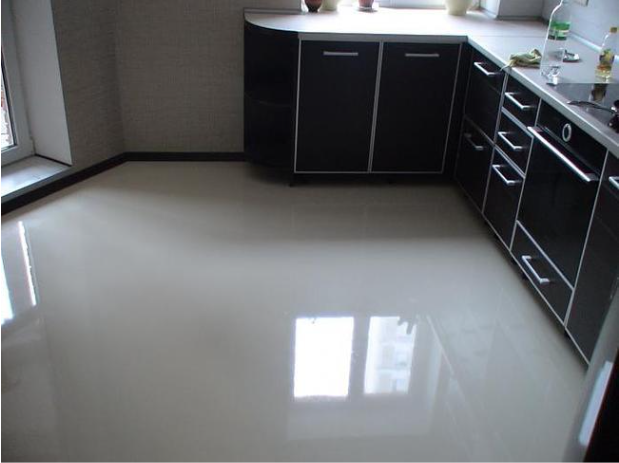
The flooring is strong, durable, and easy to care for. It looks aesthetically pleasing, has no seams, and can be matt, glossy, or textured. These floors are resistant to moisture, mechanical damage, and chemical stress. They can come in a variety of colors, monochrome or patterned. We should also mention 3D flooring, with a visual three-dimensional drawing made by a 3D printing machine, which is rapidly gaining popularity. However, you should not expect a magical 3D effect with a dolphin floating in the bathroom, as it is presented in commercials. It's just an image printed under a thick layer of varnish.
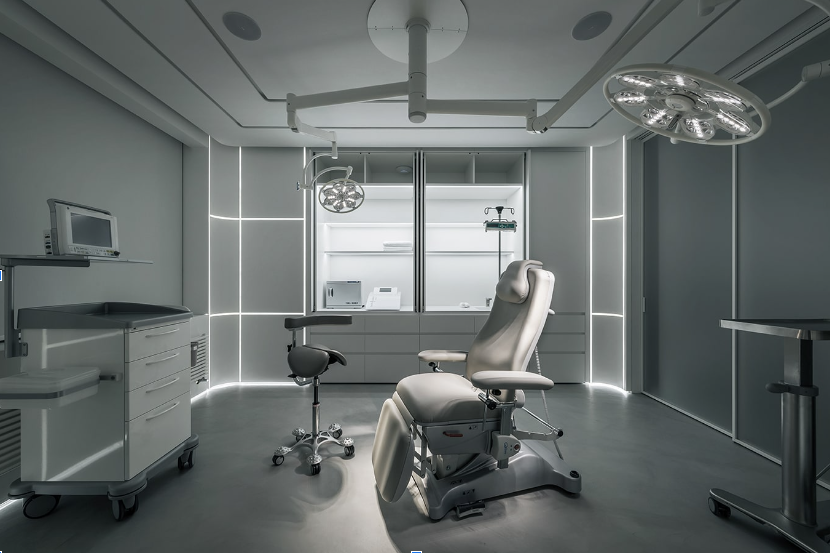
The scope of application of poured floors is huge: industrial enterprises, hospitals and sports complexes, parking lots, warehouses, shopping and entertainment centers, catering facilities, schools, basements, garages, and residential premises. In residential areas, the most common are epoxy and polyurethane coatings. For industrial and public buildings, cement-acrylic floors are more relevant.
Disadvantages of the poured floors:
- such a floor is difficult to restore, especially those that are epoxy;
- they are "cold floors", in residential spaces the installation of a "warm floor" system is required;
- poor color variety (except for 3D technology and additional coloring with acrylic paints);
- the complexity of dismantling and replacement, changing such a coating - a very complicated task;
- the flooring can turn yellow and burn out over time when exposed to ultraviolet light;
- depending on the composition of the mixture and the manufacturer, the price range of poured floors is enormous, but in general, it is quite an expensive coating.
Quartz floor
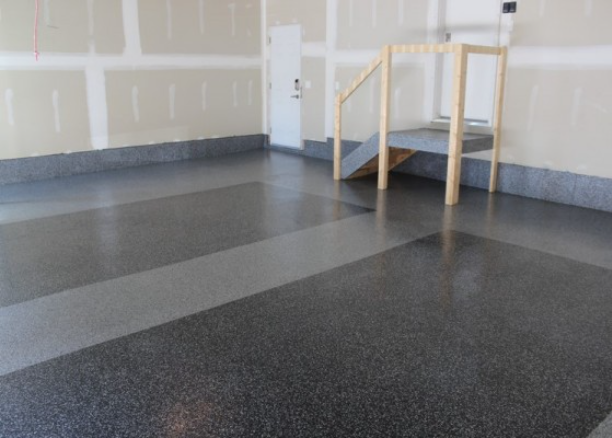
Quartz flooring is considered a separate type of flooring. In fact, it is a two-component poured floor, where the first component is a rubber or epoxy mixture, which is poured on the surface and leveled. The second is colored quartz sand, which is evenly dispersed over the liquid mixture. This composition provides a coating of exceptional strength and durability. The big advantage of quartz flooring is that it turns out to be non-slippery.
The quartz floor is applied on a pre-prepared wooden, concrete, or metal substrate. The preparatory stage, as in the case of other types of poured floors, includes leveling, puttying, and priming. The basic mixture is covered with a colorful finishing coat after curing. The final surface can be smooth, rough, or textured depending on the properties of the finishing material.
Pros and cons of quartz floors
Quartz flooring is indispensable in areas of industrial facilities and public buildings with high stress and humidity. It can also be used in residential premises. Quartz flooring is called a stone carpet because of its particular properties.
The disadvantages are:
- curing time is about 40 minutes, which requires rapid installation;
- limited operating temperature range, between +5 and +25°C;
- long start-up time (partial load is allowed in 3 days, full load in 7 days);
- relatively narrow color palette, limited to natural shades of quartz;
- cannot be used outdoors in Ukraine due to drainage properties (moisture accumulated in the thickness of the material is subjected to a large number of thawing cycles during the winter period, which destroys the coating);
- low resistance to UV radiation outdoors.
Each of the coatings described above will look stylish and serve for a long time. When deciding which flooring will best meet your needs, you should consider the purpose of the room, the conditions of its use, the total surface area, the style of the interior, and, of course, your budget.
TheTceh studio offers a wide range of finishing materials, including high-quality Spanish microcement TopCiment, and ready-made interior items. Here you can see samples of decorative coatings, decorations, and techniques, order a design project, and a team of specialists. We work all over Ukraine. In Kyiv, Lviv, Ivano-Frankivsk, Kharkiv, Dnipro, Odesa, and many other cities there are already a lot of premises, where our team had a hand in the decoration.
